


Millepassi Wine: Bolgheri Tannins and Mistakes to Avoid

Millepassi wine: why this Bolgheri red is worth understanding before drinking
If you have ever tasted a red wine and thought “it’s too tannic,” the problem is often not the wine: it’s how you served it, paired it, or interpreted it. Millepassi wine, made by Donna Olimpia 1898 and born in Bolgheri, is a perfect example for clarifying the difference between “drying” tannins and well-integrated tannins. We’re talking about a Bolgheri Superiore DOC in which Cabernet Sauvignon is listed as the main grape variety, and the idea of this guide is simple: to help you avoid the most common mistakes that make a red wine feel harsher than it really is. In practical terms, you’ll find a clear way to read tannins, a service-and-pairing checklist, and a focus on what to expect from Millepassi when you let it breathe and serve it at the right temperature.


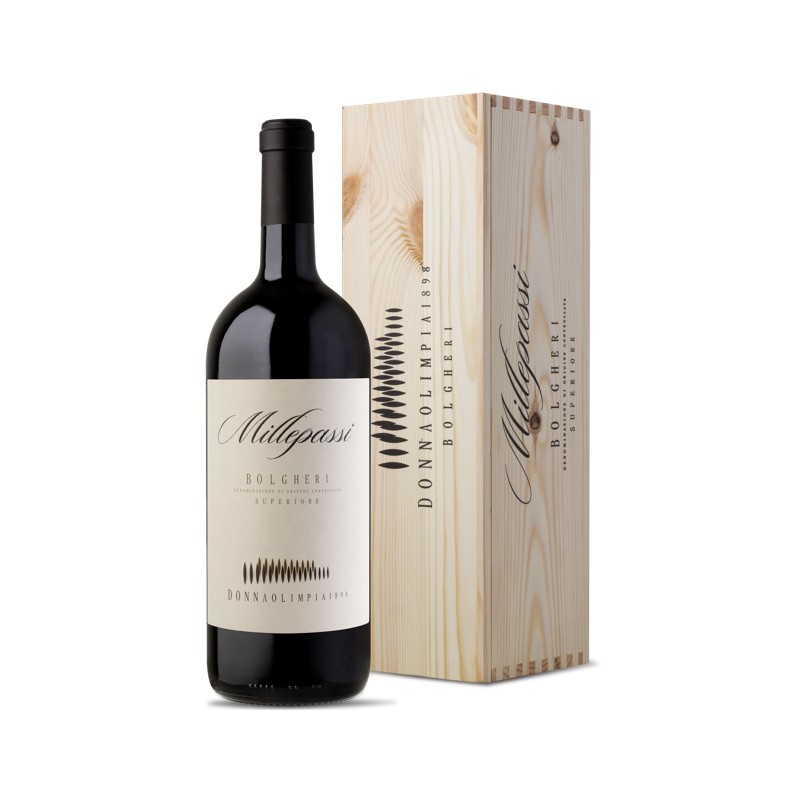
Donna Olimpia Bolgheri: the context of Millepassi wine
Donna Olimpia 1898: why Bolgheri reds have recognizable tannins
Bolgheri is a coastal area of Tuscany where a mild climate and a strong vocation for Bordeaux varieties (such as Cabernet Sauvignon and Merlot) have created a recognizable style: full-bodied reds, dark fruit and spices, with present yet manageable tannins. In the Bolgheri DOC regulations, for the Rosso and Rosso Superiore categories, varieties such as Cabernet Sauvignon, Merlot, Cabernet Franc, Syrah, and Sangiovese are included (with percentages allowed by the regulations). This explains why, in many cases, the tannin is not “subtle” like in certain lighter reds: it is part of the denomination’s identity. A useful deep dive is Donna Olimpia 1898’s Bolgheri Rosso.
Millepassi wine: what it means to choose a Bolgheri Superiore DOC
When you see the wording Bolgheri Superiore DOC, you’re entering a category focused on structure and depth. In the Donna Olimpia 1898 range, Millepassi is offered as a Bolgheri Superiore DOC and, on the Vinoso.shop catalogue, Cabernet Sauvignon is indicated as the main grape variety. Millepassi is described as a blend of Cabernet Sauvignon, Merlot, and Petit Verdot: a trio that typically brings tannin, volume, and a natural spicy note, as also described in the journey through Donna Olimpia 1898’s Tuscan reds.
Millepassi wine and tannins: what to expect in the glass
What kind of tannins does Millepassi wine have?
Tannin is the component that “tightens” your gums: it comes mainly from the skins and, in part, from seeds and oak. In Millepassi wine, tannins tend to be dense and present (consistent with the Bordeaux-style blend typical of Bolgheri), but they should not feel harsh if service is correct. The key is to recognize two signs: if you only feel dryness, you’re probably penalizing it; if instead you sense a dry but clean grip, with fruit staying in focus, then you’re catching its balance.
Structure and drinkability: how to read Millepassi wine without misunderstandings
A structured red does not have to be heavy. In the glass, a Bolgheri Superiore like Millepassi can offer dark fruit (blackberry, blueberry), spices, and cocoa notes—descriptors often reported by specialized retailers. To enjoy it at its best, look for the sense of “fullness” rather than force: when tannins are well integrated, the wine seems to flow, not block.
Millepassi wine: mistakes to avoid with tannins (and how to fix them)
Mistake #1: serving Millepassi wine too warm
When temperature rises, alcohol becomes more noticeable and tannins can seem more aggressive. For a structured Bolgheri red, serving around 16–18 °C is often a comfortable sweet spot. If the bottle has been near a heat source, cool it gradually in the fridge for a few minutes before pouring: your palate will thank you.
Mistake #2: pairing it with dishes that amplify astringency
Tannins struggle with very spicy foods or excessively acidic preparations. If you want a safe pairing, look for protein and juiciness: grilled meats, roasts, ragù, or aged cheeses. Even a board with non-spicy cured meats and a fatty element (such as a medium-aged cheese) helps soften the tannic grip.
- sliced steak or roast (juiciness = softer tannins)
- pappardelle with ragù or meat sauces (structure meets structure)
- aged pecorino or Parmigiano (salt + umami = balance)
Mistake #3: uncorking and drinking immediately, without letting it breathe
Many Bolgheri reds change dramatically with a bit of air. Opening and pouring right away can leave tannins in the foreground. Better to give it time: a stint in a decanter—or even just half an hour in the glass—can make the sip feel more relaxed. If you want a simple method, pour a first glass, let the bottle rest open, and compare after 20 minutes: you’ll often notice clearer fruit and “finer” tannins.
How to serve Millepassi wine to highlight tannins
Temperature, glass, and oxygenation: the mini checklist
Before thinking about complicated descriptors, use three concrete moves. First: choose a wide glass, so the wine has more surface area in contact with air. Second: aim for a not-too-high temperature. Third: give oxygen time to do its work. If you’re in a hurry, the decanter is the most effective shortcut.
- 16–18 °C serving temperature (avoid excessive heat)
- large “Bordeaux” style glass
- 20–40 minutes of oxygenation (in a decanter or in the glass)
When to drink Millepassi wine: occasions and “aging”
Millepassi is a red that delivers satisfaction both at an important dinner and at a Sunday lunch. If you want it more ready and softer, choose it when it has already had time to settle in bottle after release. In general, Bolgheri Superiore wines can evolve well over time: the key is storing them in the dark, at stable temperature, with the bottle lying down.
Millepassi and Bolgheri: what sets it apart from other reds in the area
Millepassi compared with other Donna Olimpia Bolgheri wines: what to look for
If you’re choosing among several labels from the same winery, the useful question is not “which is the best,” but “which is the most suitable.” Millepassi, as a Bolgheri Superiore, tends to focus on intensity and depth. For more everyday drinking, it often makes sense to consider a Bolgheri Rosso DOC from the same line, usually more immediate. On the Donna Olimpia 1898 brand page on Vinoso.shop you’ll find the full overview and can compare format, vintage, and awards.
What is Bolgheri famous for (and why tannin is part of the signature)
Bolgheri is famous for making great—in Italy—a certain “Bordeaux” style in a Tuscan key. If you want a comparison with the other side of the winery’s production, it can also be useful to read Donna Olimpia 1898’s Bolgheri Bianco DOC.
Product focus: Millepassi wine by Donna Olimpia 1898
Millepassi wine price and awards mentioned in the catalogue
On the Vinoso.shop catalogue, Millepassi 2021 is listed at €49.00 and appears with the Vinum 96 Points recognition. These are useful details for orientation: price and awards don’t replace personal taste, but they help you understand the label’s positioning.
Blend and style: what industry sources say
Cabernet Sauvignon is indicated as the main grape variety. Millepassi is in fact a blend of Cabernet Sauvignon, Merlot, and Petit Verdot: a combination that typically brings dark fruit, spice, and a solid tannic structure.
Conclusion: Millepassi wine and tannins—avoiding mistakes makes the difference
In short: Millepassi wine is not “too tannic” by nature; it is tannic in the typical way a Bolgheri Superiore is. If you serve it too warm, drink it right after opening, or pair it with foods that increase astringency, you’ll end up perceiving it as harsher than it really is. On the other hand, with the right temperature, a wide glass, and a bit of oxygenation, tannins become easier to read and the wine shows fruit and spice with greater harmony. If you want to explore Donna Olimpia 1898’s reds, start with Millepassi and use this guide as a checklist: it’s the simplest way to enjoy Bolgheri without missteps.
Comments : 0