


Fine Italian Wines: a Practical Guide to Award-Winners (2026) and Style Differences

Why talk about fine Italian wines when buying online
A “fine Italian wine” is not just an expensive bottle: it’s a wine recognizable for aromatic precision, balance, and coherence with its territory—often confirmed by scores from guides and tasters. When you buy online, that clarity becomes essential: you want to understand what you’re putting in your cart and why it’s worth opening (or gifting) that specific bottle.
In this guide you’ll find a simple path: first I clarify what makes a wine “fine,” then I show you how to read awards and scores without getting confused, and finally we get concrete with a real example: Donna Olimpia 1898 wines from Bolgheri that, in the 2026 Guides, received important evaluations.

What “fine Italian wines” really means
Fine Italian wines: measurable quality, not just prestige
First of all, “fine” must be translated into concrete criteria: grape quality, care in the cellar, technical cleanliness, territorial identity, and the ability to evolve over time. In practice, a fine Italian wine leaves a crisp impression: readable aromas, a coherent palate, and a lingering finish.
A useful clue is repeatability: when a producer maintains a credible style across different vintages, there is usually serious work behind it. Guides can help too, but only if you read them the right way (we’ll get to that in a moment).
Awards, guides, and scores: how to interpret them without mistakes
Fine Italian wines and scores: what they’re really for
Guides don’t replace your taste, but they are a compass. A high score indicates that, in tasting, the wine showed balance, aromatic definition, and persistence. The key point is to compare wines within the same type: a savory white and a tannic red have different “metrics,” so they shouldn’t be judged as if they were the same thing.
In the 2026 report by the Associazione Grandi Cru della Costa Toscana, there are scores that are particularly useful for online purchases: they tell you the wine was tasted and evaluated in a structured way by panels and tasters.
To read scores in a practical way:
- Use them to create a shortlist, not to “decide for you.”
- Look for consistency: if a winery gets strong results across multiple labels, that’s a powerful sign.
- Check vintage and category (red, white, sparkling): the evaluation refers to that specific bottle.
- If you’re gifting, a well-known score is an easy argument to explain to the recipient.
Red vs white: tannin, structure, and “style” in simple words
Fine Italian wines: differences between a tannic red and a savory white
When talking about red wine, the word that changes everything is tannin: these are polyphenols found mainly in the skins and seeds, and they create that dry/astringent sensation that “tightens” the palate. In reds, tannins can be fine and silky, or more harsh, or even mouth-puckering: the difference comes down to grape quality and how extraction and aging are managed.
In whites, structure doesn’t come from tannin, but from acidity, salinity, extract, and work on fine lees. A “fine” white shouldn’t be heavy: it should be defined and persistent, with a clean, saline finish when the territory allows it.
Typical mistakes to avoid when choosing a style:
- Thinking that “more tannin” automatically means “more quality.”
- Confusing body with alcohol level: a wine can be intense without being “hot.”
- Judging a white only by aroma: quality shows up strongly in the palate and the finish.
Real case: Donna Olimpia 1898, Bolgheri, and award-winning wines (2026 Guides)
Award-winning fine Italian wines: Donna Olimpia 1898 and the 2026 scores
If you’re looking for a concrete example of “fine Italian wines” that combine territory, modern style, and recognition, Bolgheri is a natural destination.
- 94 points for Bolgheri Rosso Millepassi 2021.
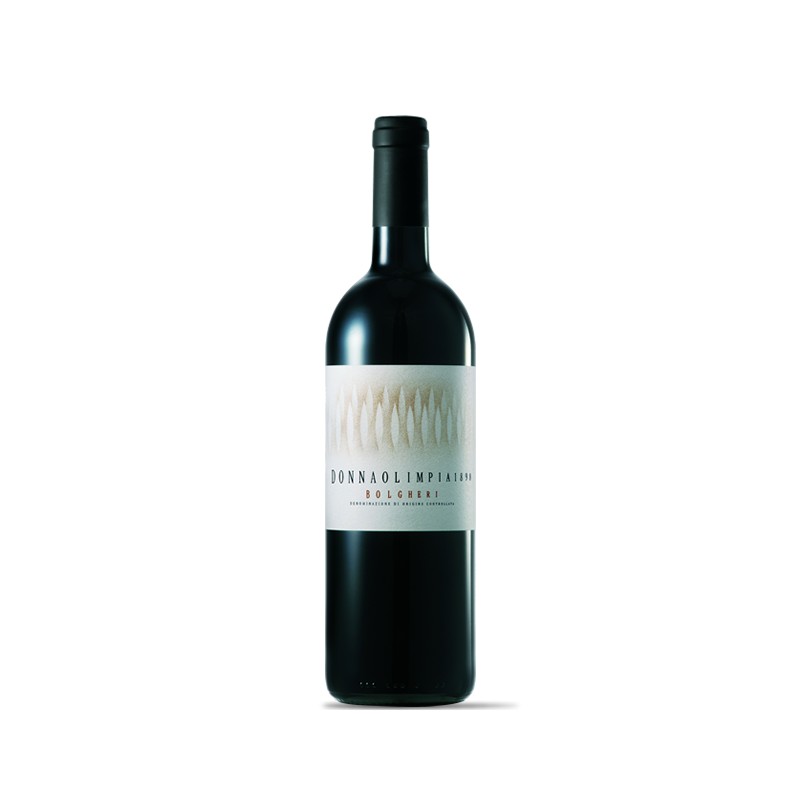
- 92 points for Bolgheri Rosso 2023.
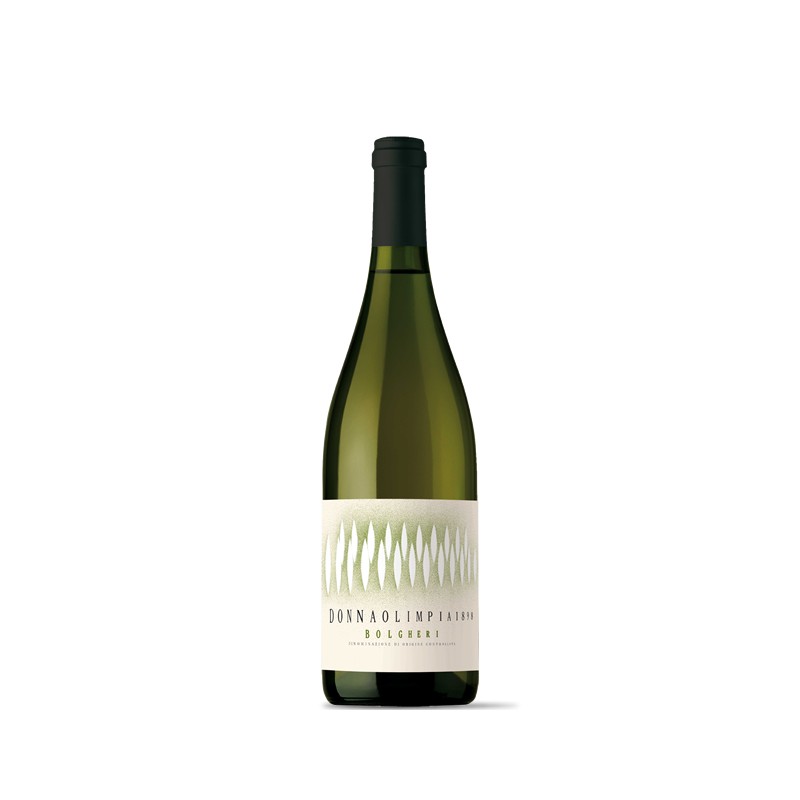
- 92 points for Bolgheri Bianco 2023.
Bolgheri D.O. Bianco 2023 Donna Olimpia 1898: what to expect in the glass
Let’s start with the award-winning white: Bolgheri D.O. Bianco 2023 is Vermentino, Viognier, and Petit Manseng. In tasting, citrus and floral notes emerge, with a mineral profile and a savory, full palate. About 14 months aging on fine lees with bâtonnage: this is an important detail because it explains why the palate feels broader and more persistent, without losing drive.
When should you choose it? It works beautifully as a “classy” bottle for a fish-based dinner, but also as a gift for someone who loves structured, precise whites.
Indicative price shown on the page (check availability and offers): €20.00; formats and quantity discounts may vary.
Bolgheri Rosso Millepassi and Bolgheri Rosso: how to choose between the two labels
If you’re aiming for a red, the practical question is: “do I want more drive and depth, or a more immediate profile?” The 2026 report gives 94 points to Bolgheri Rosso Millepassi 2021 and 92 points to Bolgheri Rosso 2023.
To explore the full category you can start from the Italian Wines on Vinoso.shop section.
How to choose (and gift) fine Italian wines without “picking the wrong bottle”
Fine Italian wines: 6 quick questions before buying online
- Occasion: gift, dinner with friends, a specific pairing?
- Style preference: red with evident tannins or savory, structured white?
- Drinker’s experience: beginner or enthusiast?
- Vintage: do you want immediacy (younger) or complexity (more evolved)?
- Format: standard 0.75 L or large format for events?
- Budget: one “iconic” bottle or two/three reliable labels?
Conclusion: the simplest way to choose fine Italian wines
In short, fine Italian wines are recognizable when quality is readable: clean aromas, a coherent palate, and a persistent finish. Guides help reduce risk—especially online—but the final choice depends on the occasion and the style you enjoy drinking.
When in doubt, go back to Vinoso.shop filters and start from a concrete question: “what experience do I want in the glass?” From there, the right bottle arrives much faster.
Comments : 0